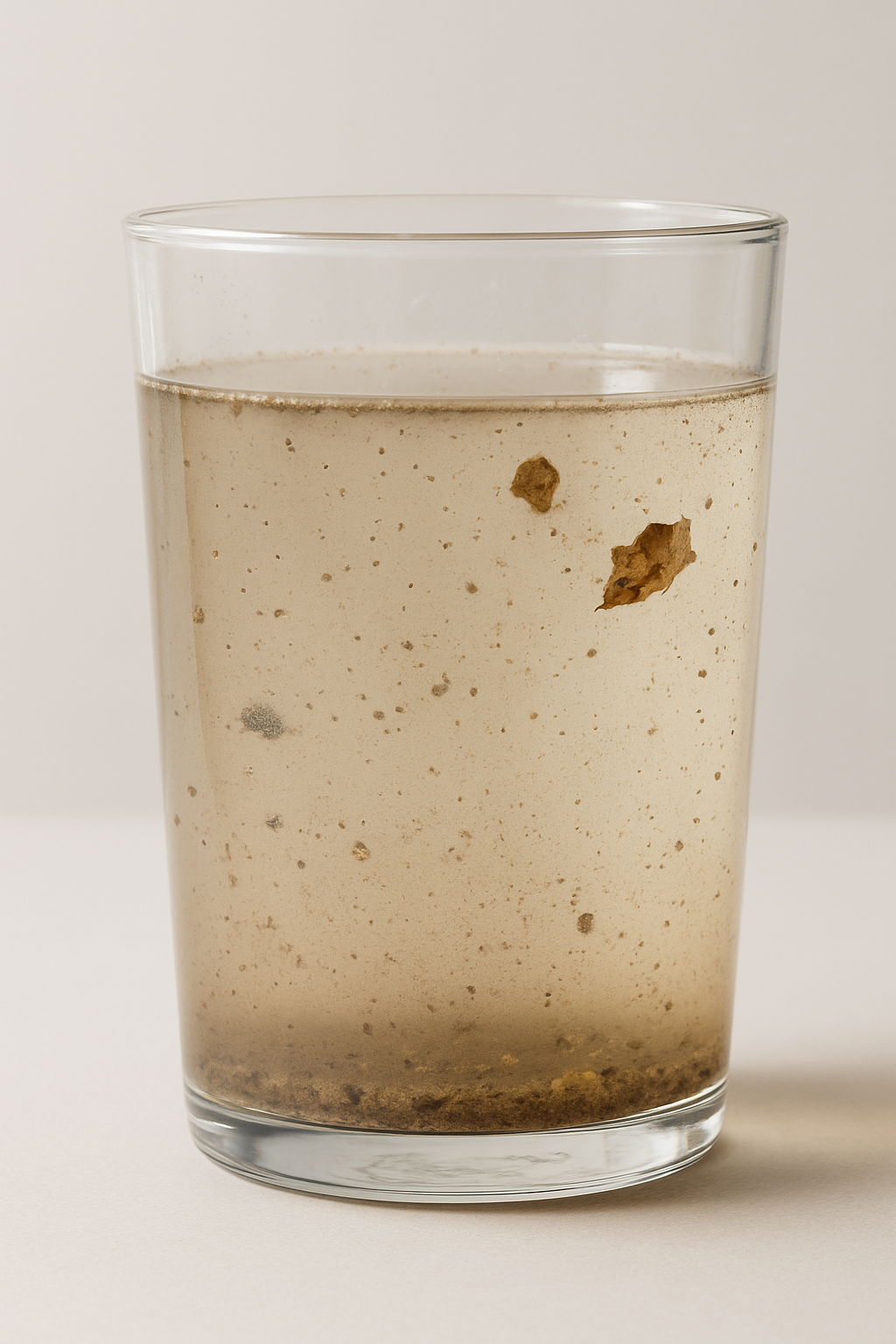
When water is collected from natural sources—rivers, lakes, ponds, ground reservoirs,
or even rainwater harvesting structures—it almost always carries a variety of physical impurities.
These impurities do not change the chemical composition of water but affect its
Physical impurities are usually the first target of
any water treatment process, because removing them improves the performance of all the downstream
treatment steps such as filtration, coagulation, disinfection, and RO.
Below is a detailed, reader-friendly guide that explains every type of physical impurity, how it
enters water, how it affects usage, and how industries typically remove it.
Suspended Impurities
Suspended impurities are solid particles that float or remain dispersed in water without dissolving in it. They make water appear cloudy or dirty.
Types of Suspended Impurities
- Silt & Clay: Very fine soil particles carried by surface runoff, floods, or erosion.
- Sand & Grit: Heavier particles typically found in groundwater or surface water near construction areas or riverbanks.
- Vegetable Matter: Leaves, small wood fragments, algae chunks, etc.
- Industrial Debris: Small particles of plastic, rubber, or process waste from industries.
How They Affect Water
- Make water turbid and unclear.
- Can settle inside pipes, tanks, and distribution lines, causing blockages.
- Reduce the efficiency of filters, membranes, and softeners.
- Act as carriers for pathogens and organic pollutants.
Removal Methods
- Screening
- Sedimentation / Clarification
- Coagulation–Flocculation
- Sand/Media Filtration
- Cartridge Filters
Total Suspended Solids (TSS)
TSS is a measured value that represents the total quantity of suspended particles present in water.
What TSS Includes
TSS includes:
- Fine soil particles
- Organic debris
- Algae fragments
- Microplastics
- Fibers from textiles or industry
- Rust particles
Why TSS Matters
- Higher TSS means poor water clarity.
- In the industrial sector, high TSS can damage equipment, increase energy consumption, and reduce membrane life.
- In drinking water, high TSS makes water unpleasant to look at, and often indicates poor hygiene.
TSS vs. Turbidity (Very Important Difference)
Even though people often confuse them, TSS and turbidity are not the same.
| Feature | TSS | Turbidity |
|---|---|---|
| Meaning | Actual solid particles measured in mg/L | Measure of cloudiness/haziness of water |
| Unit | mg/L (milligrams per liter) | NTU (Nephelometric Turbidity Units) |
| What it shows | Quantity of suspended solids | How much light is scattered by particles |
| Method | Laboratory filtration & weighing | Turbidity meter (online or portable) |
| Relation | Higher TSS usually increases turbidity, but not always | High turbidity does NOT always mean high TSS |
Example:
Very fine clay particles can create high turbidity even when TSS is low, because they scatter light more effectively.
Turbidity
Turbidity refers to how cloudy or hazy the water appears due to suspended particles. Unlike TSS, turbidity is a visual and optical property, not a direct measurement of weight.
- Clay & silt
- Microorganisms
- Organic matter
- Industrial discharge
- Air bubbles
Why Turbidity Is Important
- It indicates water quality degradation.
- High turbidity shields pathogens, making disinfection less effective.
- In drinking systems, consumers instantly reject turbid water even if it is chemically safe.
How Turbidity Is Measured
- Using a Nephelometer, which measures light scattering.
- Standard unit: NTU (Nephelometric Turbidity Units).
Removal
- Rapid sand filtration
- Coagulation
- Settling tanks
- Pressure filters
Colloidal Impurities
Colloids are extremely fine particles (often 0.001–1 micron) that do not settle quickly because they carry a negative electric charge. Their size makes them too small to settle and too large to pass through simple filters, which makes them one of the most stubborn physical impurities.
Examples of Colloids
- Clay particles
- Humic substances (natural organic acids)
- Dye pigments
- Latex particles
- Very fine biological debris
Characteristics
- Stay suspended for long periods.
- Cause persistent turbidity.
- Interfere with chemical treatment.
- Increase color intensity.
Floating Impurities
These impurities float on the surface of the water.
Examples
- Oil and grease
- Foam
- Fatty substances
- Leaves or light organic matter
Effects
- Prevent oxygen transfer
- Cause foul smell
- Interfere with biological treatment systems
Removal
- Skimming
- Oil–water separators
- Dissolved Air Flotation (DAF)
Color Caused by Physical Impurities
Physical impurities can also contribute to color, especially:
- Organic debris
- Algae
- Decaying vegetation
Color may be:
- True color (dissolved)
- Apparent color (suspended particles causing visual tint)
Removal:
- Activated Carbon
- Coagulation
- Filtration
Taste and Odor Issues (Physical Origin)
Although most taste and odor issues are chemical or biological, some physical impurities cause noticeable effects.
Examples:
- Decaying organic matter → earthy or swampy smell
- Suspended sediments → gritty taste
- Algae → musty odor
Removal:
- Pre-chlorination
- Activated carbon
- Aeration
Temperature as a Physical Parameter
Temperature is also considered a physical property of water, and although not an impurity itself, it affects:
- Dissolved oxygen levels
- Biological activity
- Corrosion behavior
- Efficiency of treatment systems
Summary Table: Physical Impurity Categories
| Category | Examples | Effects | Removal Methods |
|---|---|---|---|
| Suspended solids | Sand, silt | Cloudiness, clogging | Sedimentation, filters |
| TSS | Total suspended particles | Equipment damage | Filtration, clarification |
| Turbidity | Fine particles scattering light | Cloudy water | Sand filters, coagulation |
| Colloids | Very fine clay, humic substances | Persistent turbidity | Coagulation, UF |
| Floating matter | Oil, leaves | Foul smell, surface film | Skimming, DAF |
| Color | Organic matter | Aesthetic issues | Carbon, coagulation |
| Odor/Taste (physical) | Sediments, algae | Unpleasant water | Carbon, aeration |
Conclusion
Physical impurities are the first layer of contamination present in raw water. They impact not only the appearance and acceptability of water but also the efficiency and lifespan of treatment equipment. By understanding the nature of TSS, turbidity, suspended particles, colloids, and floating impurities, both industries and households can ensure better water management and safer water consumption.