
Sewage treatment plants (STP): how they work
What is in sewage, how an STP treats it, and where the treated water can be reused.

A sewage treatment plant (STP) cleans the wastewater from toilets, kitchens and bathrooms of hotels, hospitals, apartments, schools and townships. Treated well, the water can be reused for flushing and gardening, and the plant protects local rivers and groundwater.
What is in sewage
Domestic sewage is more than 99 percent water. The rest is organic matter, suspended solids, nutrients such as nitrogen and phosphorus, and germs. Typical raw sewage has a BOD of about 200 to 350 mg/L and suspended solids of a similar level.
The aim of an STP is to bring BOD, suspended solids and germs down to safe levels, and to deal with the sludge that results.
The treatment train
- Bar screen and grit removal
- Equalisation tank
- Biological aeration
- Clarifier (settling)
- Filtration and disinfection
- Screening and grit removal: keeps rags, plastic and sand out of the pumps and tanks.
- Equalisation: a tank that holds the flow and mixes it, because sewage flow peaks in the morning and evening.
- Biological treatment: air is blown into the water so that bacteria can consume the organic pollution. This is the heart of the plant.
- Clarifier: the bacteria settle out as sludge, and clear water overflows. Part of the sludge is returned to the aeration tank.
- Filtration and disinfection: sand and carbon filters polish the water, and chlorine or UV kills the germs.
Common plant types
| Type | How it works | Good for |
|---|---|---|
| Activated sludge (ASP) | A suspended culture of bacteria in an aeration tank | Larger plants with steady flow |
| MBBR | Bacteria grow on small plastic carriers kept moving in the tank | Compact sites, variable load |
| SBR | One tank fills, aerates, settles and decants in cycles | Small to medium plants, good control |
| MBR | Membranes replace the clarifier and give very clear water | Tight space and high reuse quality |
Sludge handling
Excess sludge is thickened, then dried on sand drying beds or dewatered mechanically. Dried sludge makes a useful soil conditioner when it has been handled and stabilised properly.
Reusing the treated water
- Toilet flushing
- Gardening and landscaping
- Cooling tower make-up
- Vehicle and floor washing
Related products
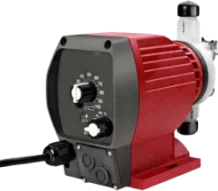 Dosing pumpPumps, UV and filters
 Flow meterInstruments and test kits
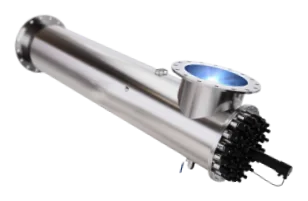 UV systemPumps, UV and filters
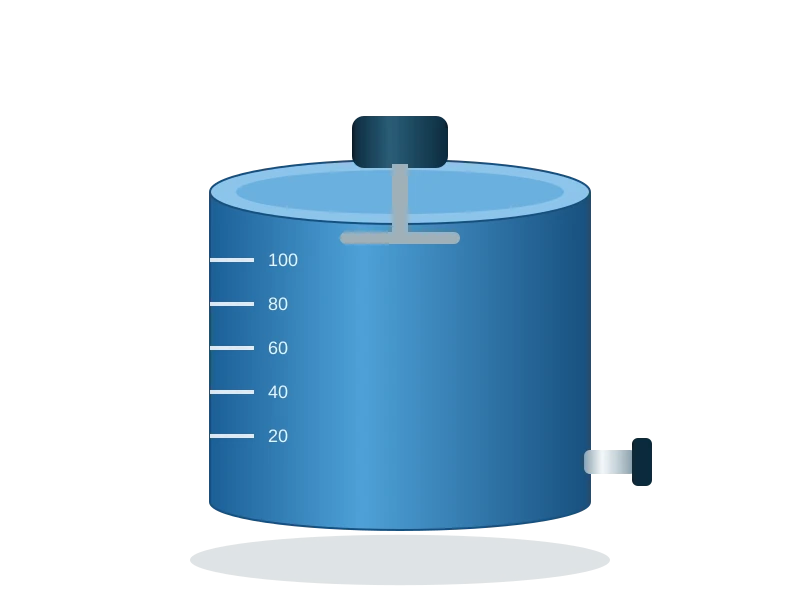 Chemical dosing tankVessels and housings