
Cooling tower water treatment
Scale, corrosion and slime in cooling water, cycles of concentration, and how to control them.

A cooling tower cools water by letting a small part of it evaporate. The water that evaporates leaves its salts behind, so the circulating water gets saltier every hour. Without treatment, the system scales up, corrodes and grows slime.
Cycles of concentration
The number of times the salts in the circulating water are concentrated compared with the make-up water is called the cycles of concentration. If the make-up water has 300 mg/L of dissolved solids and the circulating water has 1200 mg/L, the tower runs at 4 cycles.
Higher cycles save water, but raise the risk of scale and corrosion. Most towers run between about 3 and 6 cycles, depending on water quality and treatment.
Water balance in simple terms
- Evaporation is roughly 1 percent of the circulating flow for every 5 to 6 °C of cooling range
- Blowdown is water discharged to keep the cycles in check. Ignoring drift, blowdown is about evaporation divided by (cycles minus 1)
- Make-up replaces both: evaporation plus blowdown
The three problems
| Problem | Cause | Control |
|---|---|---|
| Scale | Hardness and alkalinity concentrate and deposit on hot surfaces | Scale inhibitor, limiting cycles, softening make-up water if needed |
| Corrosion | Oxygen, chlorides and low pH attack metal | Corrosion inhibitor, pH control, limiting chlorides |
| Biological growth | Warm, open, nutrient-rich water grows algae, slime and bacteria | Oxidising and non-oxidising biocides, sunlight control, clean basin |
A treatment programme
- Test the make-up water: hardness, alkalinity, chloride, silica, TDS.
- Choose a safe number of cycles from those results.
- Dose a scale and corrosion inhibitor in proportion to make-up water.
- Use biocides on a schedule, alternating types so organisms do not become resistant.
- Set blowdown by conductivity so cycles stay in range.
- Check and clean the basin, fill and strainers regularly.
Health and safety
Warm, stagnant cooling water can grow harmful bacteria, including those that cause Legionnaires' disease. Keep the water treated, keep the system clean, and do not let water stand in idle cooling circuits.
Related products
 Cooling tower chemicalTreatment chemicals
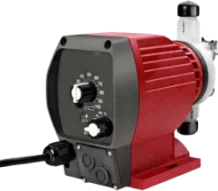 Dosing pumpPumps, UV and filters
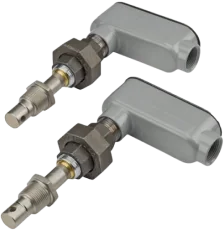 Conductivity sensorInstruments and test kits
 Chemical dosing tankVessels and housings