
DM plants: how demineralised water is made
Cation, anion and mixed bed units, step by step, and what quality to expect.

A demineralisation (DM) plant removes nearly all the dissolved salts from water using ion exchange resins. The result is very pure water for boilers, pharmaceutical and electronics work, laboratories and process industries.
Why demineralise?
Softening removes only hardness. Some uses need almost every dissolved ion gone: high-pressure boilers, where salts and silica would carry over into steam and deposit on turbine blades, and processes where traces of salt would spoil the product.
The stages
- Strong acid cation exchanger (H form)
- Degasser removes carbon dioxide
- Strong base anion exchanger (OH form)
- Mixed bed polisher
- Cation unit: replaces every positive ion (calcium, magnesium, sodium) with hydrogen. The water leaves acidic.
- Degasser: an air blower strips out the carbon dioxide that forms from bicarbonate, which lightens the load on the anion unit.
- Anion unit: replaces every negative ion (chloride, sulphate, bicarbonate and silica) with hydroxide. The hydrogen and hydroxide combine to form pure water.
- Mixed bed: cation and anion resin mixed in one vessel give a final polish, catching the last traces of salt.
The quality you can expect
| Stage | Typical outlet |
|---|---|
| Two-bed DM (cation, degasser, anion) | Conductivity about 5 to 20 microsiemens/cm, low silica |
| After mixed bed polisher | Below about 1 microsiemens/cm, very low silica |
The actual numbers depend on the raw water, resin condition and how well regeneration is done. A conductivity meter on the outlet tells the operator when a bed is exhausted.
Regeneration
When a unit reaches the end of its run, the resin is renewed with chemicals: acid (hydrochloric or sulphuric) for the cation resin, and caustic soda for the anion resin. Ejectors draw the chemicals from their tanks and mix them with water on the way to the vessel.
When DM is a good choice
- Feed water with low to moderate total dissolved solids
- Boilers that need very low silica and conductivity
- Plants that have cheap access to acid and caustic and a way to treat the waste
- As the polishing stage after RO when the highest purity is needed (RO plus mixed bed)
As the salt content of the feed rises, RO usually becomes cheaper to run than DM, because it uses power instead of large quantities of chemicals. See our guide on choosing between RO, DM and a softener.
Related products
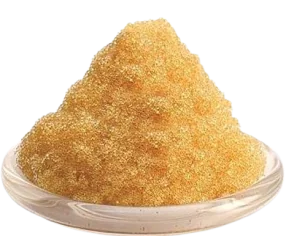 ResinMedia and resin
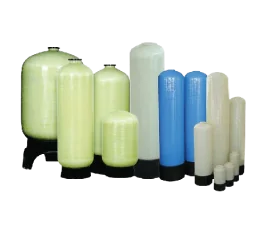 FRP vesselVessels and housings
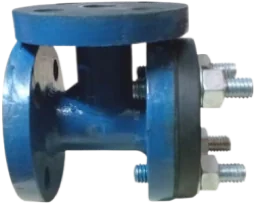 CIEL ejectorValves, strainers and ejectors
 Conductivity meterInstruments and test kits