
RO, DM or softener: which one do you need?
A simple way to choose, with the questions to answer and the trade-offs of each option.

These three plants are often confused, but they do different jobs. The right choice depends on what is in your water and what you need it to be. Getting this right saves money on both the plant and the running cost.
What each one removes
| Softener | Reverse osmosis | DM plant | |
|---|---|---|---|
| Hardness (Ca, Mg) | Yes | Yes, mostly | Yes |
| Total dissolved salts | No, swaps hardness for sodium | Yes, about 98 to 99 percent | Yes, nearly all |
| Silica | No | Partly | Yes, strongly |
| Bacteria and organics | No | Largely | No |
| Typical outlet quality | Soft, still salty | Low TDS | Very low conductivity |
Four questions to answer
- What is the water for? Drinking, a boiler, a cooling tower, or a process?
- How hard and how salty is it? Hardness and TDS from your water report.
- How pure must it be? Low scale, low TDS, or near-zero conductivity?
- What can you do with the waste? Brine, reject water or acid and caustic waste each need somewhere to go.
Rules of thumb
- Only a scale problem (hard water, low TDS): a softener is usually enough and the cheapest.
- High TDS (salty or brackish): RO, because it removes salts without the chemicals a DM plant would use.
- Very high purity or high-pressure boiler: DM, or RO followed by a mixed bed polisher.
- Low TDS feed needing pure water: a DM plant can be the economical route.
- Drinking or mineral water: filtration, carbon, RO, and disinfection.
Where the running cost comes from
| Option | Main running cost | Waste produced |
|---|---|---|
| Softener | Salt | Brine from regeneration |
| RO | Electricity, membranes, antiscalant, cleaning chemicals | A reject stream, commonly 25 to 50 percent of the feed |
| DM | Acid and caustic soda, resin replacement | Acidic and alkaline regeneration waste, needing neutralisation |
As the TDS of the feed rises, the chemical cost of DM climbs, and RO becomes the lower cost route. At low TDS the opposite can be true.
Combinations are normal
- Softener then RO: protects the membrane from scale when hardness is high
- RO then DM or mixed bed: gives very pure water with less chemical use than DM alone
- Filter, carbon, softener then boiler: the common line for a low-pressure boiler
Related products
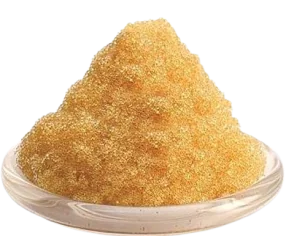 ResinMedia and resin
 RO membraneRO plant components
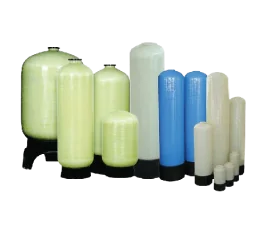 FRP vesselVessels and housings
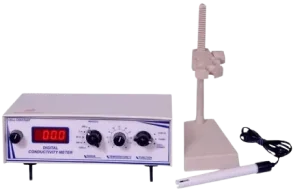 Conductivity meterInstruments and test kits