
How to read a water analysis report
What each test means, typical guideline values, and which results point to which treatment.

A water report is a list of numbers, and it is the starting point for choosing any treatment. Reading it takes only a few minutes once you know what each line means and what is normal.
Before you read it
Check the report is for the water you will actually use, not just a sample from one day. Water from a tube well, a river or a municipal line can change with the season. The date, source and sample point should be written on the report.
The common parameters
| Parameter | What it tells you | Typical guide value for drinking water |
|---|---|---|
| pH | Acidity or alkalinity | About 6.5 to 8.5 |
| TDS | Total dissolved salts | Below about 600 mg/L is good taste; up to 1000 mg/L is generally the upper limit |
| Total hardness | Calcium and magnesium | Below about 200 mg/L is comfortable; much higher causes scale |
| Alkalinity | Bicarbonate, carbonate; affects scaling and corrosion | No health limit; matters for boilers and RO |
| Chloride | Salt content; corrosive to metals | Below 250 mg/L for taste |
| Turbidity | Cloudiness from particles | Ideally below 1 NTU; 5 NTU or less is a common upper limit |
| Iron | Staining, metallic taste | Below about 0.3 mg/L |
| Nitrate | Fertiliser and sewage contamination | Below 50 mg/L (WHO) |
| Fluoride | Natural in some groundwater | Up to 1.5 mg/L (WHO) |
| Arsenic | Natural in some groundwater, a health hazard | WHO guideline 0.01 mg/L; national limits may differ |
| Coliform bacteria | Sign of faecal contamination | None in 100 mL |
These are general guide values. Check the current Nepal standard for drinking water and any standard that applies to your industry.
From result to treatment
| If the report shows | It usually points to |
|---|---|
| High turbidity or suspended solids | Settling, coagulation and filtration |
| Iron or manganese | Aeration, oxidation and filtration |
| High hardness | Softener |
| High TDS, chloride or nitrate | Reverse osmosis |
| Chlorine, colour, odour | Activated carbon filter |
| Bacteria present | Disinfection with chlorine or UV |
| Arsenic or fluoride above limits | Specific adsorption media or RO, after expert advice |
Industry needs differ
Drinking water targets are not the only ones that matter. A boiler cares about hardness, silica and alkalinity. An RO plant cares about hardness, silica, iron, chlorine and the silt density of the feed. A brewery or beverage plant cares about taste, chlorine and microbial quality. Always tell the designer what the water is for.
What to send us
- The full water report, with date and source
- The daily flow you need
- What the treated water is for
- Any photos of existing equipment or scale
Related products
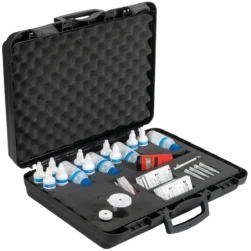 Water test kitInstruments and test kits
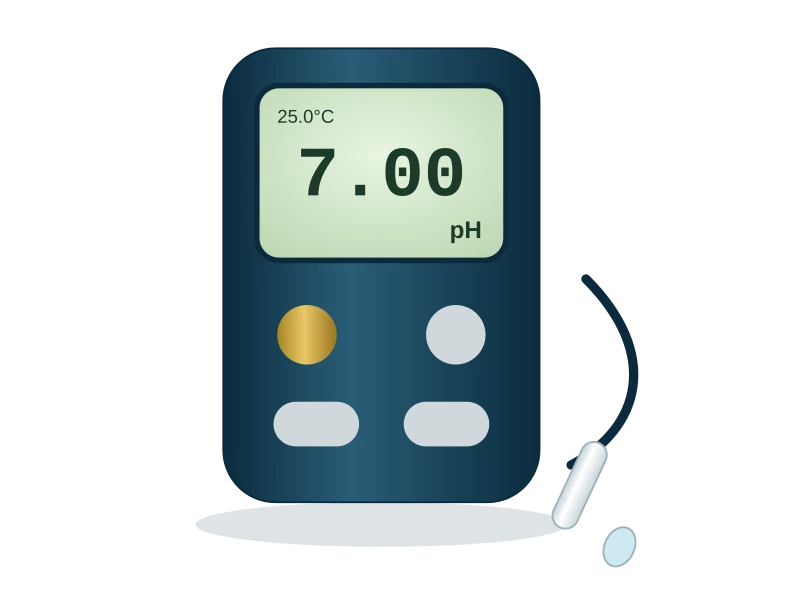 pH meterInstruments and test kits
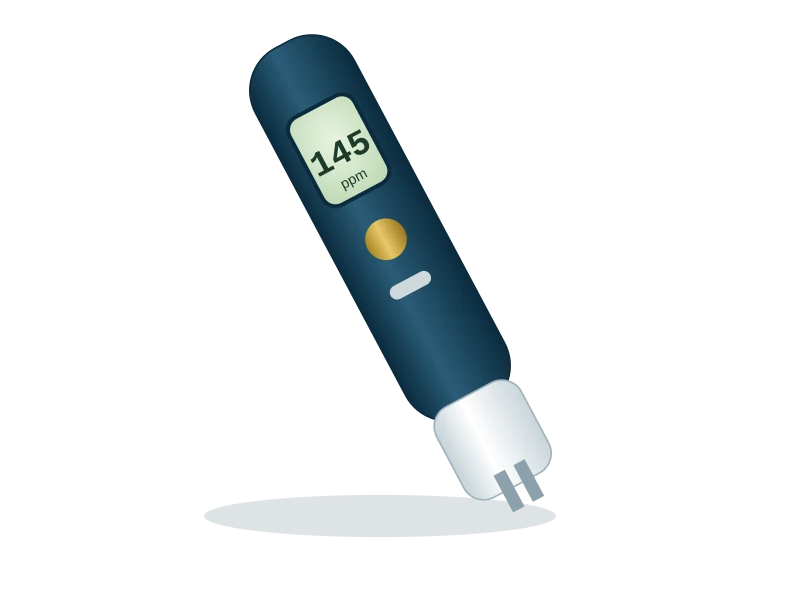 TDS meterInstruments and test kits
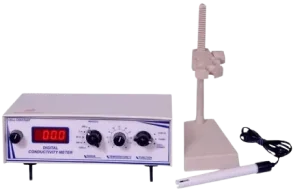 Conductivity meterInstruments and test kits